ChatGPT for Seniors by Stesha Smith: An Honest Review and Guide
Artificial intelligence is becoming part of everyday life, but getting started with a new technology is not always easy. For someone who has never used ChatGPT before, even a simple conversation with an AI can feel unfamiliar.
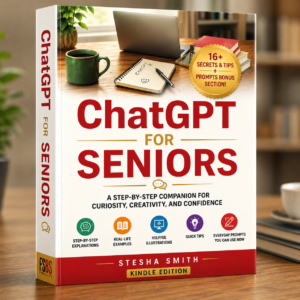
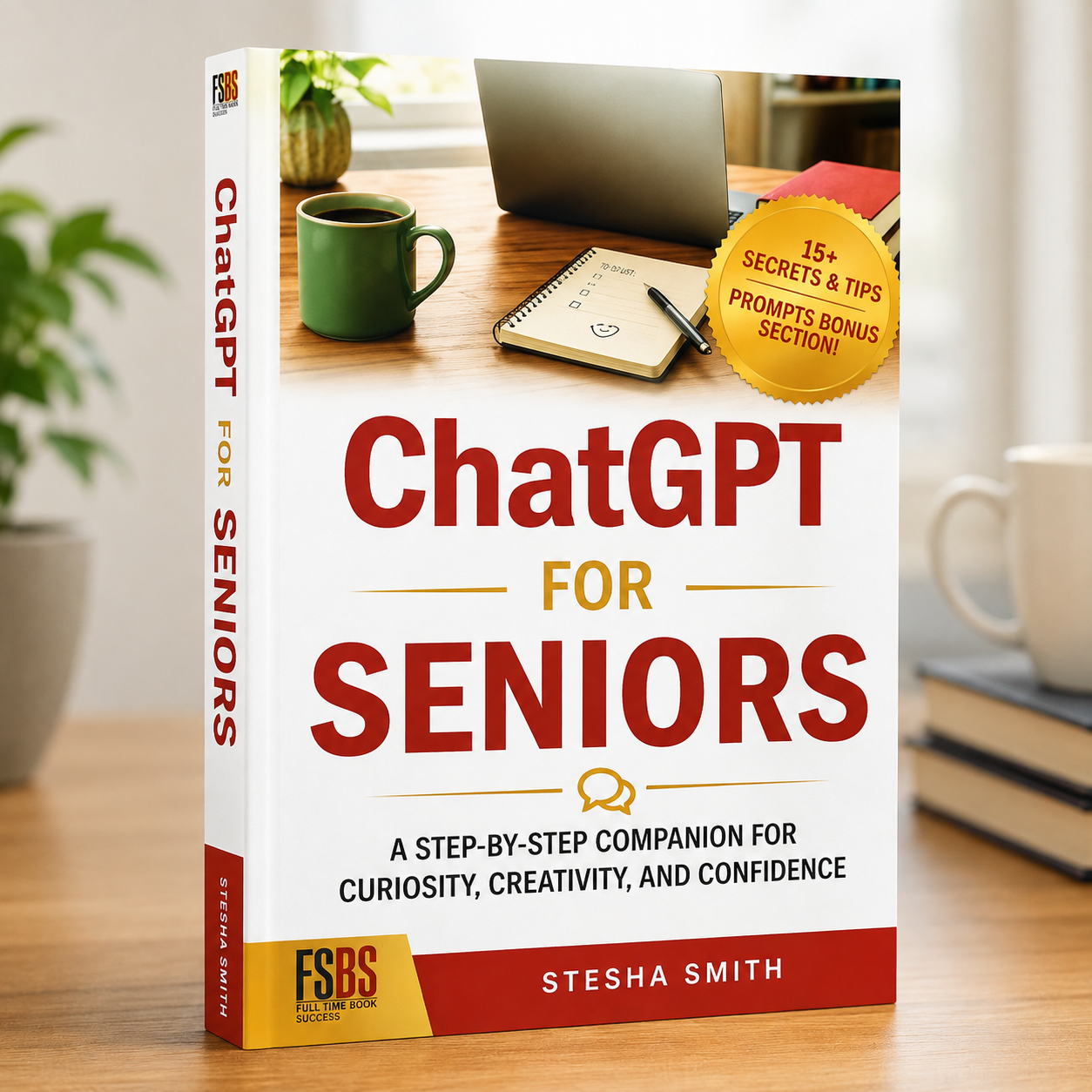
ChatGPT for Seniors: A Step-by-Step Companion for Curiosity, Creativity, and Confidence by Stesha Smith is designed to make that first experience more approachable. The book focuses on practical uses of ChatGPT and is written for readers who may not have a technical background.
But is it actually worth buying?
This honest review looks at what the book covers, who may benefit from it, and what readers should realistically expect.
What Is ChatGPT for Seniors?
ChatGPT for Seniors is presented as a step-by-step companion for learning how to use ChatGPT with greater confidence.
The product description focuses on everyday applications rather than programming or complicated artificial intelligence concepts.
Among the topics presented are:
Understanding what ChatGPT is and what it is not
Learning how to write better prompts
Getting assistance with emails and everyday writing
Planning meals and grocery lists
Planning vacations and special events
Understanding technology in plain English
Exploring hobbies and creative activities
Bible study and journaling
Exploring family history
Staying safer online
Solving common ChatGPT problems
Building confidence when communicating with AI
The book also includes examples, illustrations, quick tips, and prompts that readers can try themselves.
Why Would Seniors Want To Learn ChatGPT?
ChatGPT can be used for many ordinary tasks.
For example, you might ask it to help draft an email, explain a technology term, brainstorm ideas for a hobby, organize a vacation plan, or create a grocery list.
These tasks do not require programming knowledge.
The key is learning how to communicate with ChatGPT clearly and understanding that its responses should still be reviewed.
For someone who is unfamiliar with artificial intelligence, learning through everyday examples can be much less intimidating than starting with technical explanations.
A Beginner-Friendly Approach
The biggest selling point of this book is its accessibility.
The book is specifically positioned for readers who may not consider themselves particularly good with computers.
That makes its step-by-step approach relevant for people who want to learn gradually rather than trying to understand every feature of AI immediately.
A beginner can start with basic questions, experiment with the examples, and gradually become more comfortable with the technology.
The goal is not necessarily to become an AI expert. It is to understand how ChatGPT can become a useful tool for everyday activities.
What Can You Actually Do With ChatGPT?
There are many practical possibilities.
Write Better Emails
ChatGPT can help organize thoughts, create a first draft, or make an existing message easier to understand.
For important emails, however, the final message should always be reviewed carefully before sending.
Plan Meals and Grocery Lists
You can use ChatGPT to brainstorm meal ideas and organize a grocery list based on ingredients or preferences.
The suggestions should still be adjusted to your own circumstances and requirements.
Plan Vacations
ChatGPT can help generate travel ideas, possible activities, packing suggestions, and questions to consider before a trip.
However, current travel information such as prices, schedules, availability, and opening hours should always be verified separately.
Understand Technology
Technology often comes with unfamiliar terminology.
One useful feature of ChatGPT is the ability to ask it to explain a complicated concept in simpler language.
You can also continue asking follow-up questions until the explanation makes sense.
Explore Hobbies and Creative Ideas
ChatGPT can act as a brainstorming partner for writing, crafts, gardening, journaling, learning activities, and other interests.
It can generate ideas, but the user remains in control of deciding which ideas are actually useful.
Want To Learn ChatGPT Step By Step?
If you have been curious about ChatGPT but have hesitated because artificial intelligence seems complicated, ChatGPT for Seniors is a book worth considering.
Rather than searching through countless tutorials, you can start with a resource specifically structured around beginner questions, everyday examples, and practical prompts.
If you want to explore the book and get a copy, check the Amazon listing here:
If you prefer learning from a structured guide instead of trying to figure everything out on your own, this book provides a straightforward starting point.
It is especially relevant for readers who want to discover practical uses of ChatGPT without first learning technical concepts.
Is ChatGPT Difficult To Learn?
The answer depends on the individual.
Some people become comfortable with ChatGPT after only a few conversations, while others may need more time.
Fortunately, there is no requirement to learn everything at once.
You can start by asking simple questions and gradually experiment with more detailed prompts.
A step-by-step book can make this process easier because it gives beginners examples to follow instead of leaving them wondering what to try next.
Important Things To Know Before Using ChatGPT
While ChatGPT can be useful, it is not always correct.
AI can misunderstand questions, provide inaccurate information, or produce an answer that sounds convincing even when it needs verification.
For important subjects, information should always be checked against reliable sources.
Users should also be careful with personal information.
Do not enter passwords, banking information, identity documents, or other sensitive details into an AI conversation.
The safest approach is to treat ChatGPT as a helpful assistant rather than an authority that should automatically be trusted.
Who Is This Book For?
Seniors Who Are New To AI
The book is particularly relevant to older adults who want to understand ChatGPT without having a technical background.
Complete Beginners
It may also appeal to anyone who has heard about ChatGPT but has never really learned how to use it.
Family Members Helping Older Relatives
A family member could use the book as a resource when helping a parent or grandparent become familiar with AI.
Curious Everyday Users
You do not need to be passionate about technology to benefit from learning how AI can assist with writing, planning, creativity, and information.
What Makes The Book Interesting?
The practical focus is one of its strongest characteristics.
Instead of concentrating on the technical development of artificial intelligence, the book focuses on what an ordinary person can do with ChatGPT.
The inclusion of prompts and real-life examples is also useful because readers can experiment with the ideas themselves.
The coverage of online safety and common ChatGPT problems is another practical element for beginners.
What Should You Not Expect?
It is important to keep expectations realistic.
This book cannot turn someone into an AI expert overnight.
It also cannot guarantee financial results, productivity improvements, or any particular outcome.
Artificial intelligence is evolving rapidly, so some ChatGPT features, interfaces, and recommendations may change over time.
The book is therefore best viewed as a starting point for learning rather than a permanent instruction manual.
Is ChatGPT for Seniors Worth Buying?
For a complete beginner who wants an approachable introduction to ChatGPT, the book is worth considering.
Its focus on everyday activities makes artificial intelligence easier to relate to, while the examples and prompts provide practical things to try.
Experienced ChatGPT users may not need an introductory guide of this type. But someone who is still asking, “What can I actually do with ChatGPT?” may find the book useful.
The value ultimately depends on how much experience you already have and how you prefer to learn.
Final Verdict
ChatGPT for Seniors: A Step-by-Step Companion for Curiosity, Creativity, and Confidence by Stesha Smith is designed to help beginners approach ChatGPT without feeling overwhelmed by technical language.
It covers everyday applications including writing, planning, technology explanations, hobbies, journaling, and other activities.
The book should not be viewed as a guarantee of specific results. Instead, it can serve as a practical starting point for learning how to communicate with ChatGPT and explore its potential uses.
For readers who have been curious about artificial intelligence but have not known where to begin, this beginner-focused guide may be a useful resource.

 Artificial intelligence is becoming part of everyday life, but getting started with a new technology is not always easy. For someone who has never used ChatGPT before, even a simple conversation with an AI can feel unfamiliar.